

Four months ago, Thegoobr's $3 million gambling debt was one of the biggest stories on Gambling X. Community figures were lending him money. The streams were intense. The debt kept climbing. Everyone was watching.
Then, supposedly, it just stopped. The debt seemingly disappeared from the conversation. No public resolution, no clear explanation. It became ancient history almost overnight.
A theory posted by Ivar Navarro (@navarro_ivar) on X offers a possible explanation. And whether or not you agree with every detail, it raises questions worth thinking about. Read the original post here.
TL;DR
The theory: Thegoobr borrowed real money from real people to create the illusion of genuine high-stakes gambling. But the losses were on Shuffle's in-house games, where the casino could allegedly return the funds behind the scenes. The lenders got paid back. The debt was never real risk. The viewers were the only ones who actually lost something: their trust and, for some, their money chasing a "recovery arc" that was manufactured.
The Theory
Navarro's thesis is straightforward. The loans were real. The people lending money were real community figures. The transactions were visible and verifiable. That is what made the whole thing convincing.
But the gambling, according to the theory, was not. Thegoobr almost exclusively played Shuffle's in-house originals, where operator fees are minimal compared to third-party slots. If the casino is the house and the house controls the game, returning funds to the streamer after a "loss" is operationally simple.
The lenders were not necessarily in on it. They likely believed they were lending to a gambling addict for a small interest return. They served as the "proof of stake," the credibility layer that made the whole operation look legitimate.
The Alleged 5-Step Cycle
Here is how Navarro breaks down the mechanics:
- The Loan: A documented, real-money loan from a reputable source. This creates the "proof" that silences skeptics.
- The Loss: The money gets "lost" on Shuffle's in-house originals. Because these are house-owned games, operator fees are virtually nonexistent, making it the cheapest way to move volume.
- The Return: Shuffle allegedly returns those funds to the streamer behind the scenes.
- The Payoff: The streamer uses that money to pay off the original lender. Debt zeroed. No personal risk.
- The Bonus: If the streamer wins on camera, it is a double victory. The lender gets paid instantly, and viewers see a "recovery run" that encourages them to chase their own losses.
The alleged 5-step cycle
How the theory says the scheme works.
The Loan
The Loss
The Return
The Payoff
The Bonus
Net resultZero personal risk. Lender paid. Community fooled. Content created.
Why In-House Games Matter
This is the detail that makes the theory technically plausible. When a streamer plays a third-party slot from a provider like Pragmatic Play or Push Gaming, the casino pays licensing fees and provider cuts on every spin. The money genuinely leaves the system.
But in-house originals are different. The casino built the game. They run it. They set the parameters. The money moves within their own ecosystem. If they wanted to return funds to a specific player after a session, the infrastructure to do so already exists.
I am not saying this is what happened. I am saying the mechanism is there.
The Evolution of Fake Gambling
If you have been around crypto casino streaming for a while, you remember the "fake balance" era. Streamers like Roshtein were accused of playing with inflated, non-withdrawable balances provided by casinos. The community eventually caught on because the signs were obvious: unrealistic bet sizes, no withdrawals shown, and an unwillingness to prove the balance was real.
Evolution of fake gambling
From obvious to engineered, according to the theory.
Old model
Fake Balance
- Inflated balance on screen
- Easy to spot by community
- No real transactions visible
- Low credibility with viewers
- Exposed multiple times
Alleged new model
Real Loans, Fake Risk
- Real money from real people
- Verifiable transactions
- Community vouches for lenders
- High credibility, hard to disprove
- Debt narrative creates sympathy
Navarro's argument is that this alleged scheme is the next evolution. Instead of faking the balance, you use real money from real people. The transactions are on-chain or publicly visible. The community can verify them. Skepticism disappears because the money trail looks legitimate.
As Navarro puts it: "It's a masterpiece of design, but a total betrayal of the community's trust."
The Community Reaction
The theory gained traction quickly on Gambling X. The replies told their own story.
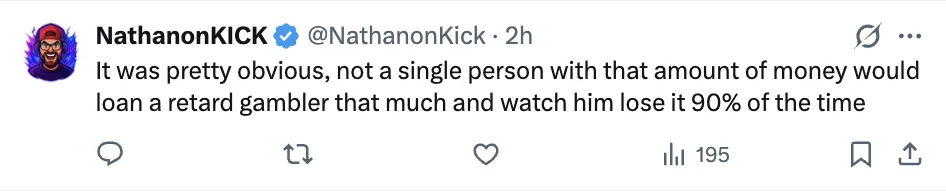
Post by @NathanonKick on X

Post by @LethalAce777 on X
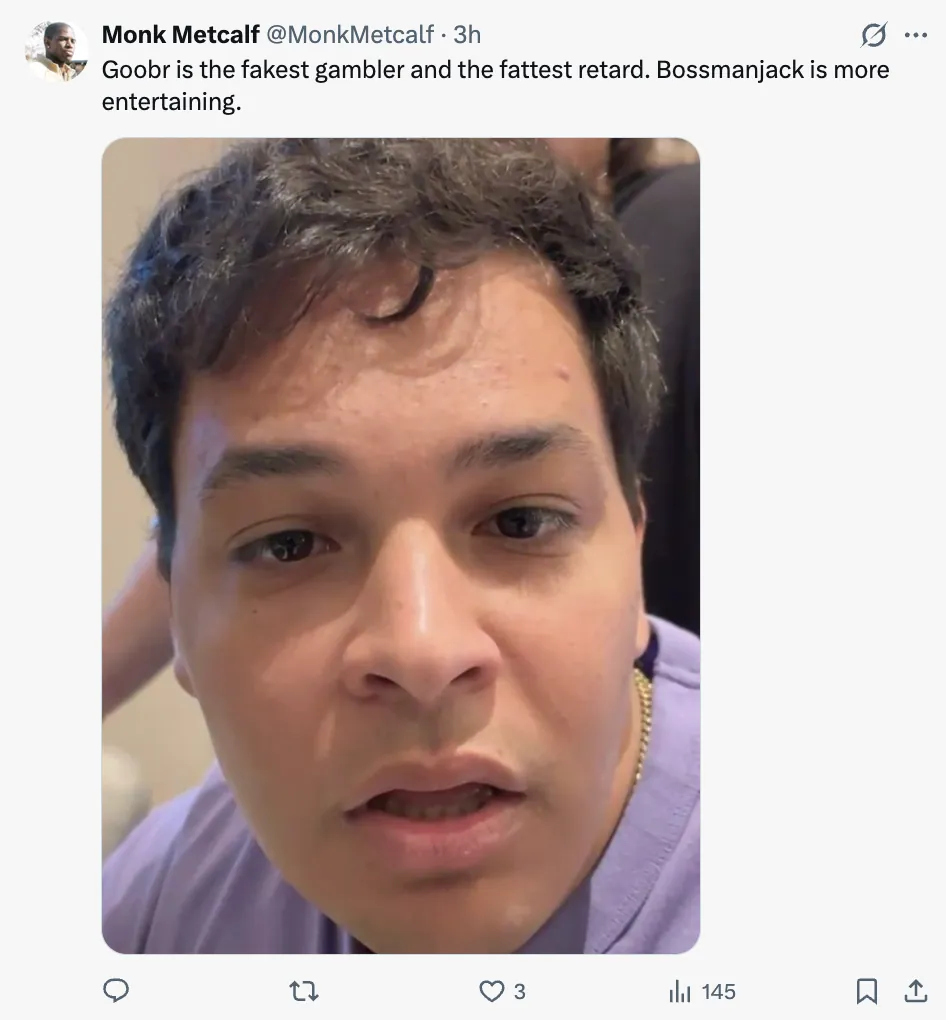
Post by @MonkMetcalf on X
Not everyone agreed. Some pushed back directly:

Post by @harrycolquhoun_ on X
The community is genuinely split on this. Some see the pattern clearly. Others vouch for the streamer. That divide is part of what makes the theory compelling. If even the people closest to the situation disagree on what is real, how is the average viewer supposed to know?
For a deeper dive into how this theory connects to the broader pattern, this video breaks down the logic behind the alleged scheme and what it means for gambling streaming:
Why the Debt Narrative Disappeared
Navarro's explanation for the timing is simple. The number kept growing until it hit an unrealistic threshold. At some point, $3 million in gambling debt from a streamer becomes too large for even the most sympathetic viewer to believe.
The solution: a calculated reset. A short break from streaming, and when the comeback happens, the debt is never mentioned again. A closed chapter in a narrative that no longer serves the brand.
Whether or not that is what actually happened, the pattern is worth noticing. Big narrative, intense period, quiet disappearance. No resolution.
Who benefits?
If the theory is accurate, here is who wins and who loses.
The Streamer
- Zero financial risk
- High-tension content created
- "Recovery arc" narrative drives views
- Debt narrative builds audience sympathy
The Casino
- Hours of free advertising
- Credibility via "real" stakes
- Minimal cost (in-house games)
- Viewer sign-ups from FOMO
The Viewers
- Sold a false reality
- Encouraged to chase losses
- "Recovery run" is not real
- Trust in community damaged
Related: When the Game Itself Is the Trick
Fake stakes are one side of the problem. But what about when the game mechanics themselves are designed to take your money in ways you do not see? I looked at a Stake slot that can take 99% of your bonus win through a single hidden feature.
Read: Da Hacker: The Stake Slot That Can Take 99% of Your Bonus Win →
What I Think
I do not know if this theory is correct. Nobody outside of the people directly involved can say for certain. What I do know is that the questions Navarro raises are legitimate and the mechanics he describes are technically possible.
The crypto casino streaming space has a history of deception. From fake balances to undisclosed sponsorships, the playbook keeps evolving. Whether this specific case fits that pattern is for you to decide.
But here is what concerns me: if this model works, it is nearly impossible to detect. Real money, real lenders, real transactions. The only thing that is fake is the risk. And the only people who pay a real price are the viewers who believed the stakes were genuine and gambled their own money trying to replicate a recovery arc that may have never been real.
If you watch gambling streams, watch them for entertainment. Never assume the risk you are seeing on screen is the same risk you would face with your own money.